
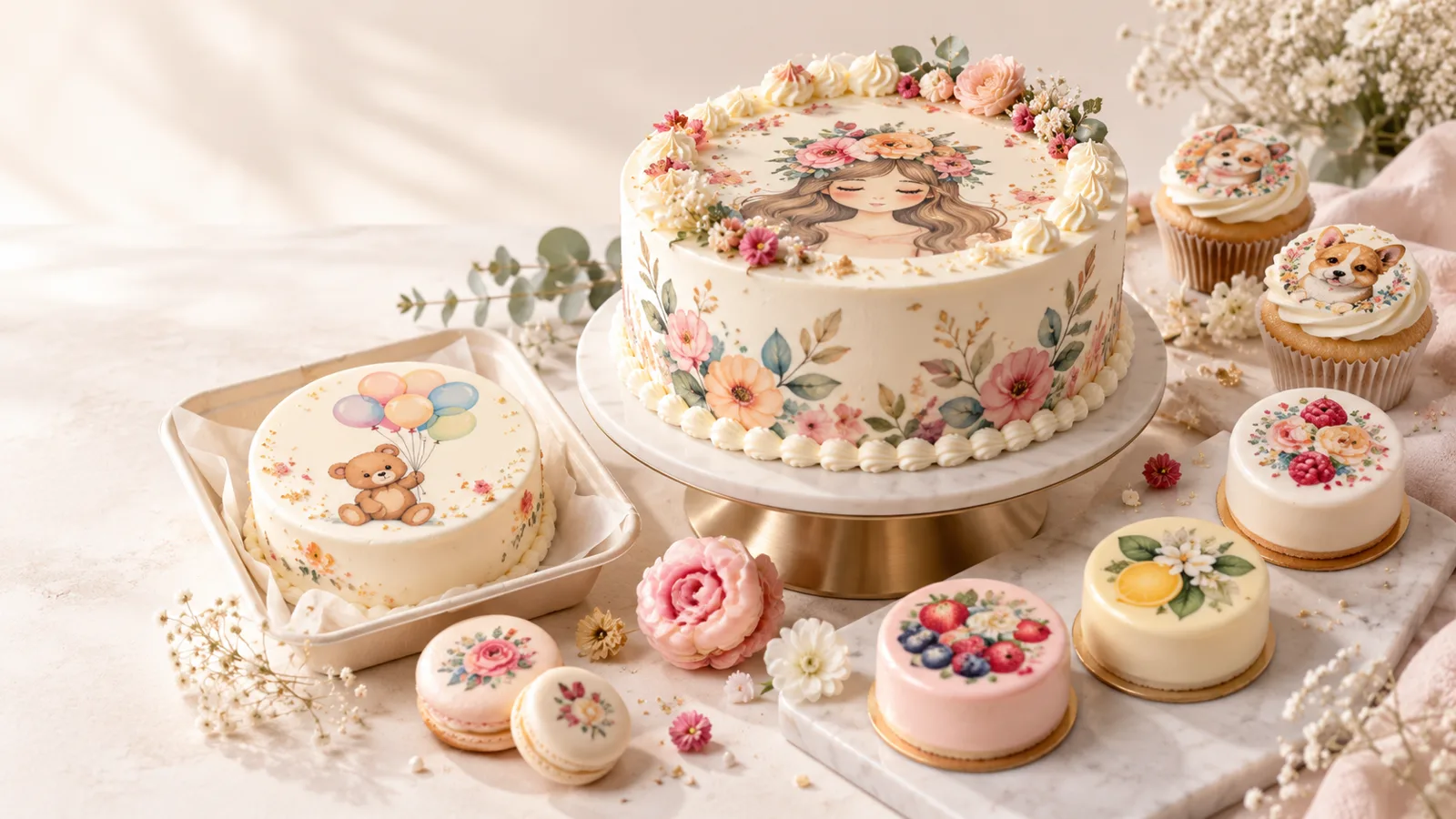
Edible Cake Printer: Direct Printing on Cakes and Desserts in Minutes
Print photos and logos directly on cakes, bento cakes, mirror glaze, cupcakes and desserts. Personalise cakes in minutes with very low edible ink costs.
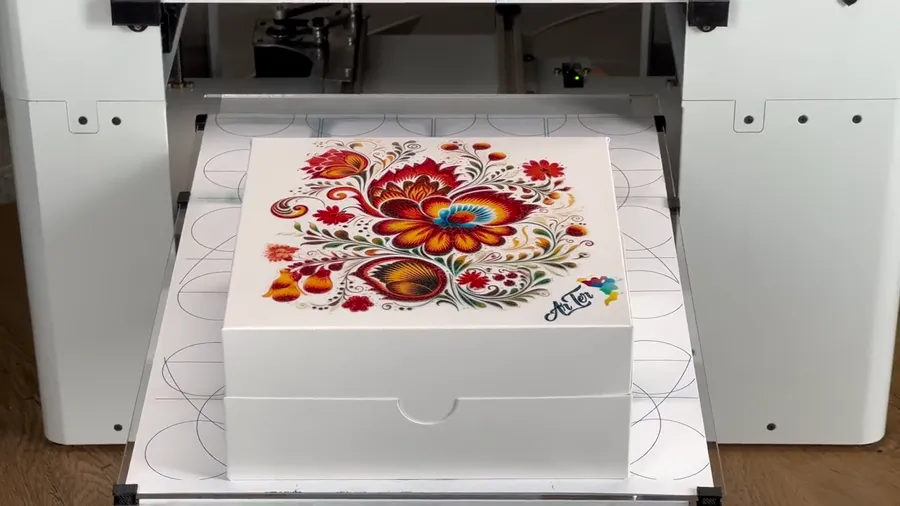
ArTer edible printers apply full-colour images directly onto cakes, bento cakes, mousse cakes, cupcakes, éclairs, trifles and pastries, as well as cookies, macarons, marshmallows, lollipops and many other confectionery products.
The main advantage of direct edible printing is the ability to turn a ready-made dessert into a uniquepersonalisedgift in just a few minutes.
Imagine a display filled with white bento cakes, mousse cakes with mirror glaze and other ready-to-decorate desserts. A customer chooses a photograph, greeting or company logo — and shortly afterwards receives a cake with a personalised design.
What can an edible cake printer offer your business?
- Bright, full-colour images printed directly onto suitable cake coatings.
- Less need for edible paper transfers, with direct printing offering attractive and practical results.
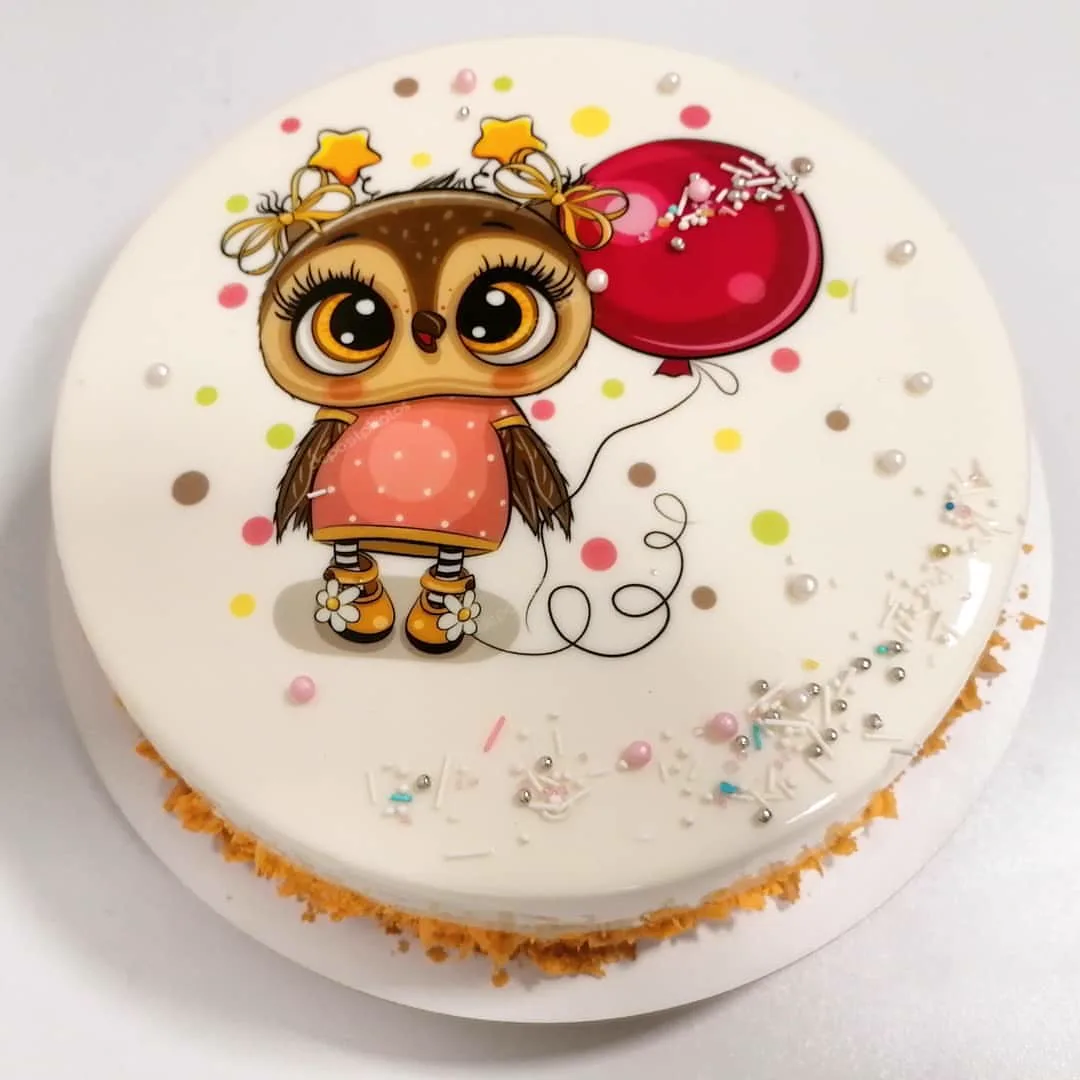
- Unique decoration possibilities, including printing on suitable mirror-glaze surfaces.
- Personalisation of cakes and desserts after an order is received.
- Extremely low edible ink costs.
- Additional revenue without changing the basic cake recipe.
- Faster decoration of urgent orders and opportunities to increase the average order value.
- More freedom to create distinctive artisan products.
- New opportunities with cafés, restaurants, corporate clients and event organisers.
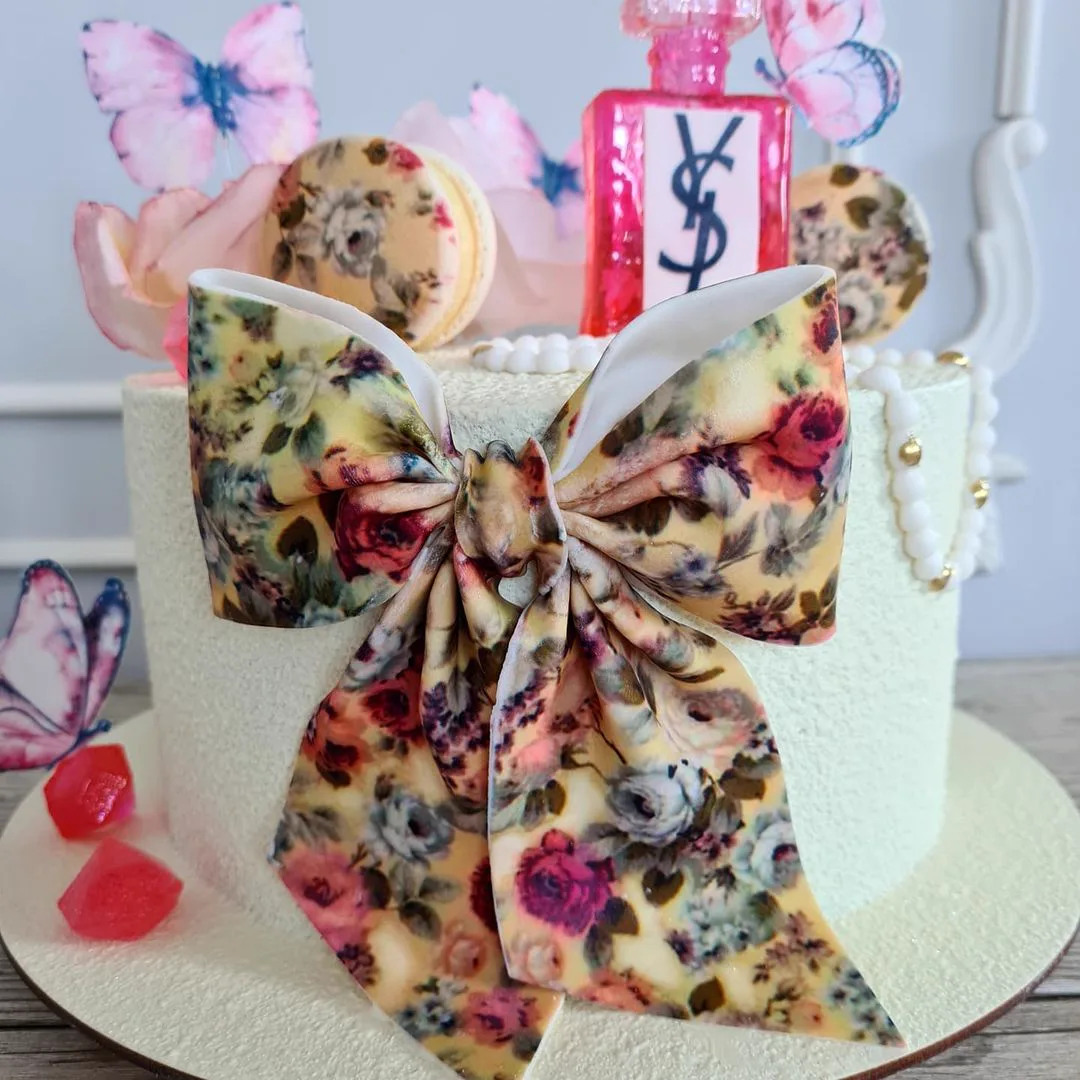
Examples of direct printing on cakes and desserts
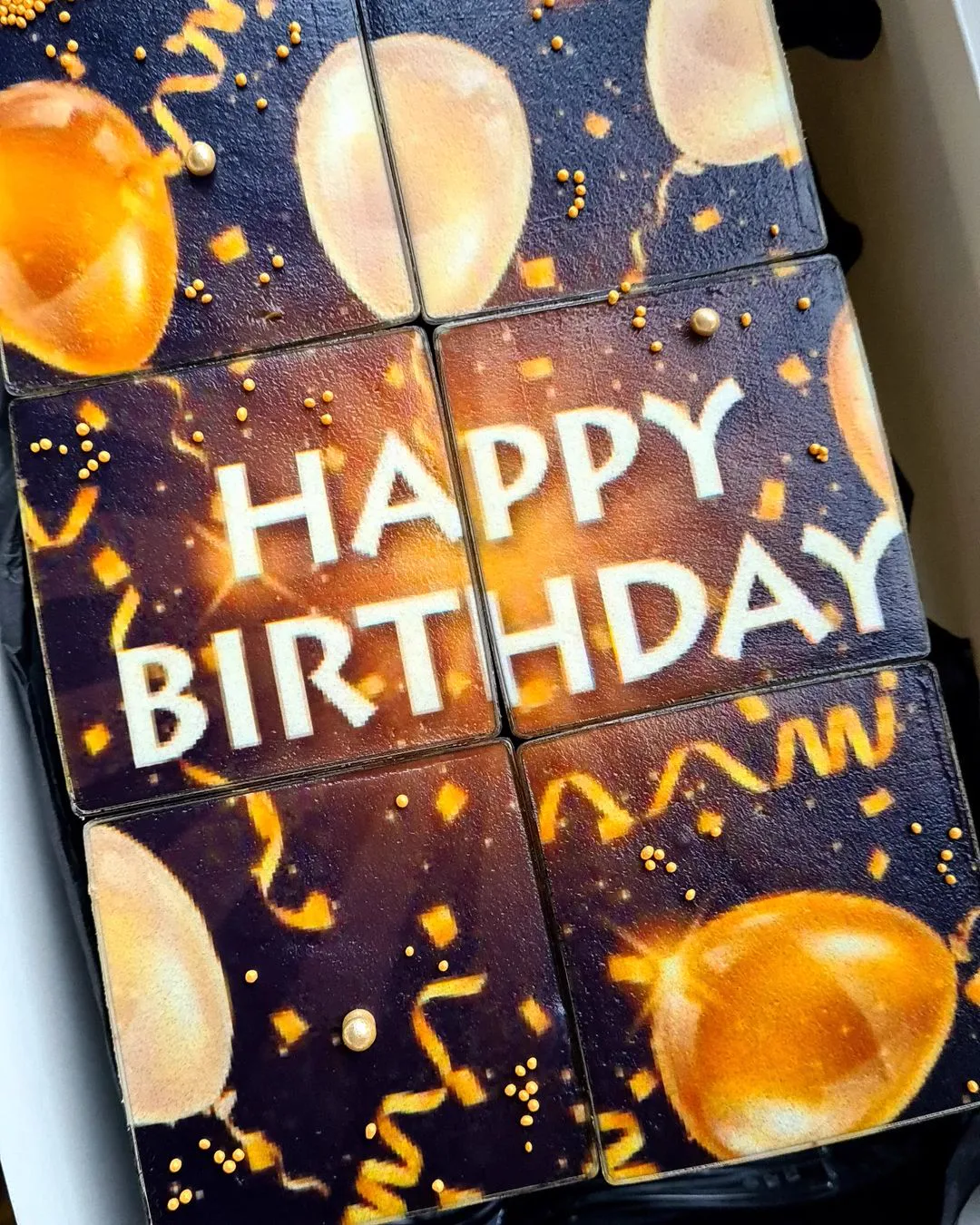
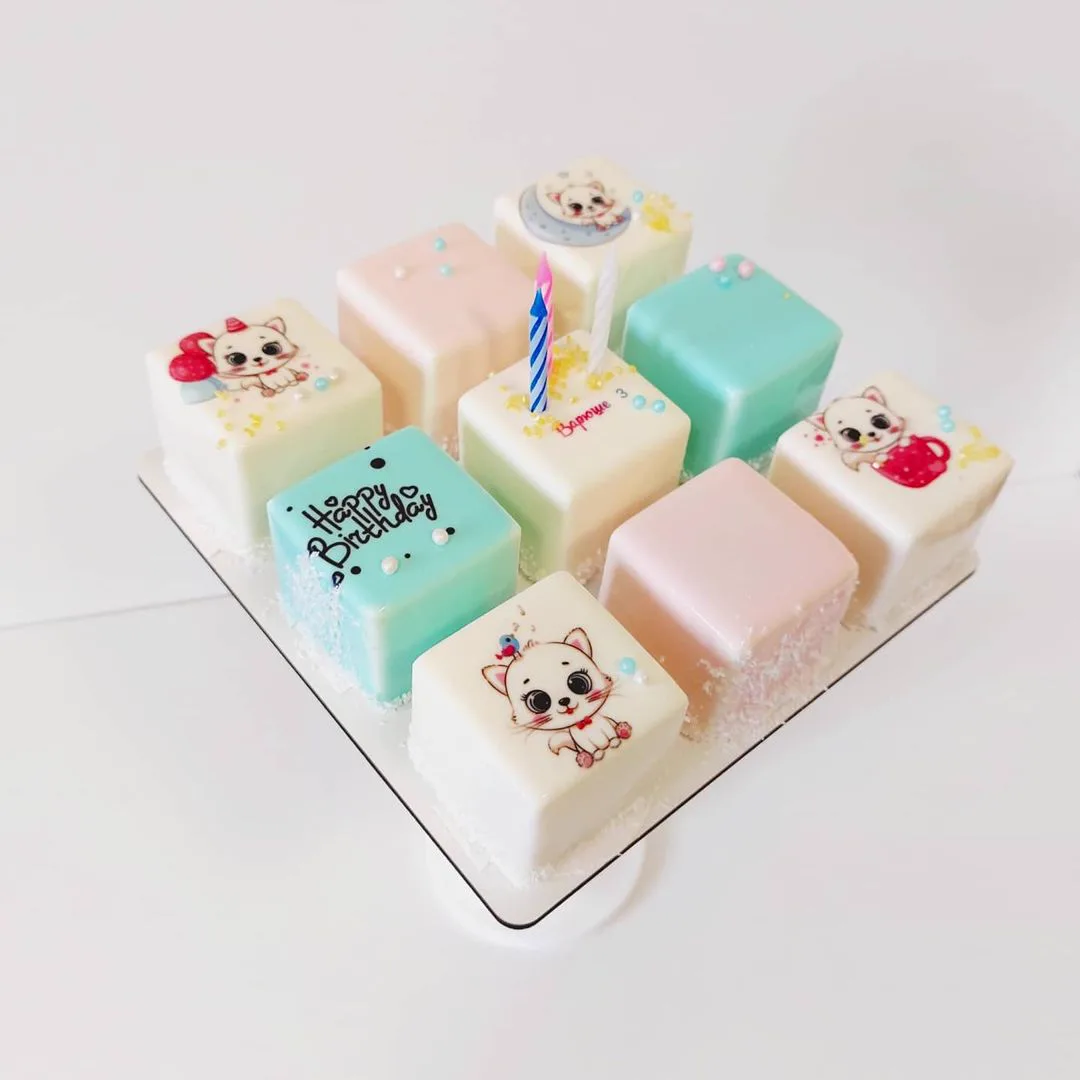
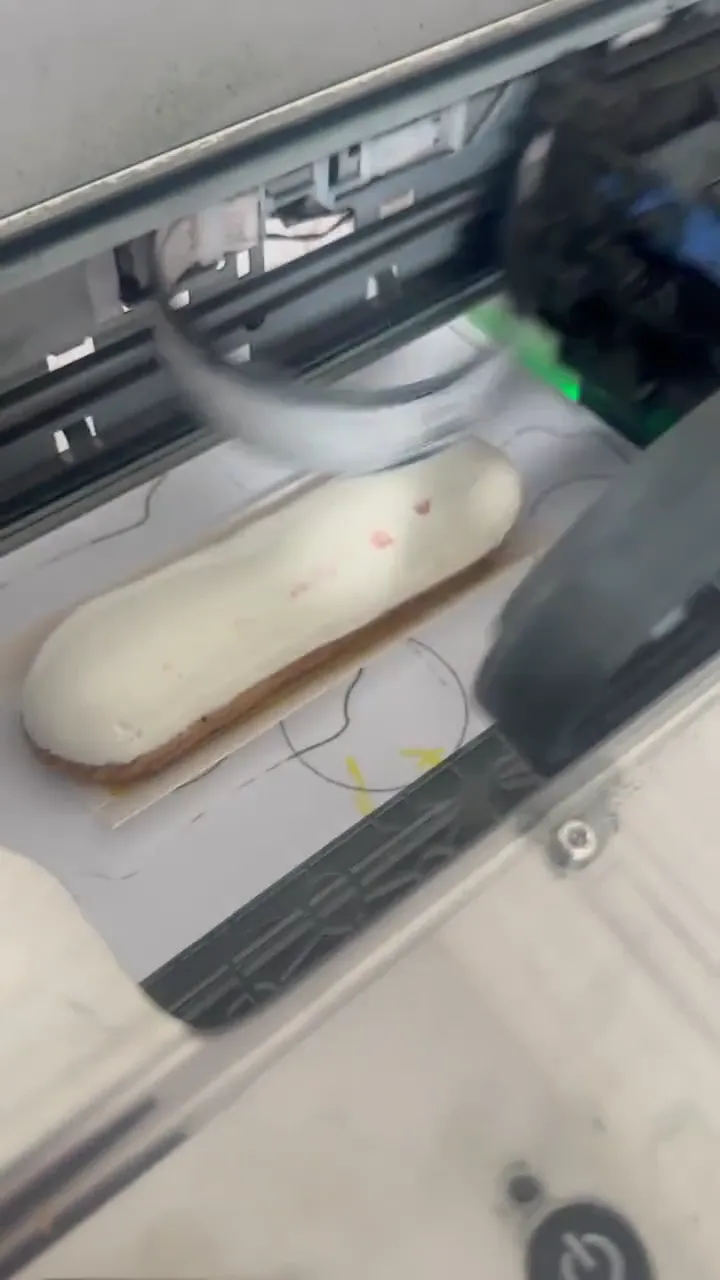
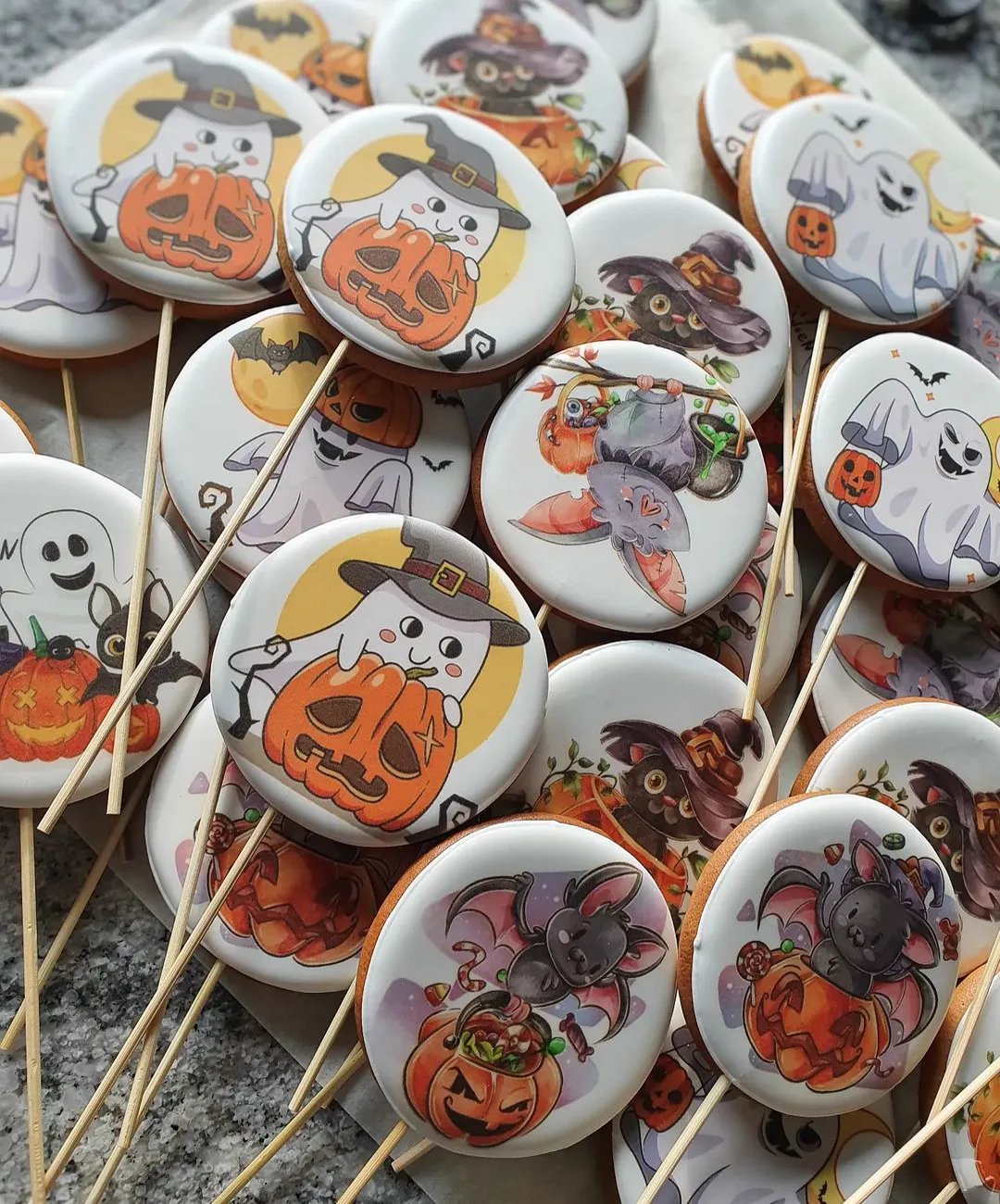
How much does it cost to print an image?
The following figures show approximate edible ink consumption for a fully covered circular image.
| Image diameter | Ink consumption | Ink cost |
|---|---|---|
| Ø12 cm — small bento cake | ≈0.113 ml | ≈€0.0085 |
| Ø15 cm — bento or small cake | ≈0.177 ml | ≈€0.0133 |
| Ø20 cm — standard cake | ≈0.314 ml | ≈€0.0236 |
| Ø30 cm — large cake, E15A3 | ≈0.707 ml | ≈€0.0530 |
The calculation uses 10 ml/m² for complete image coverage and a price of €30 for 400 ml of edible ink. Actual consumption depends on the image and the surface.
For C10 and C15N, printing an area of up to 20 × 30 cm typically takes approximately 1.5–4 minutes, depending on print quality and coverage. Preparing the artwork and coating takes additional time.
Even a large full-colour image therefore uses only a few eurocents’ worth of edible ink.
How can a cake printer increase profits?
Instantpersonalisation. Prepare cakes with a standard light-coloured finish in advance, then print the final image after receiving a customer order.
Higher average order value. Customers pay for individuality — their photograph, message or unique artwork — rather than the tiny quantity of ink used.
Urgent orders. Direct printing helps complete personalised decorations quickly, without the long lead times required for elaborate hand painting.
Corporate clients. Print company logos on cakes, cupcakes, éclairs and individual desserts for presentations, conferences, restaurants and events.
A wider product range. Printing on suitable cream, fondant and mirror-glaze coatings opens new decoration possibilities. Printed images can be combined with handmade artistic details.
Creative freedom. Confectioners can develop designs that would otherwise be difficult or time-consuming to produce.
What about investment payback?
Unlike large orders of cookies or macarons, cake printing does not have to rely on high production volumes.
The financial benefit comes from several sources: increasing the value of each finished cake, reducing decoration time, completing urgent orders, offering a wider range of products and winning customers who want personalised desserts.
Because the ink cost is extremely low, even a modest charge for a custom design can generate meaningful additional revenue. Actual payback depends on order volume, labour savings and what customers are willing to pay for personalisation.
Is edible printing difficult?
The printing process itself is straightforward. However, each product type needs a suitable printable surface. Depending on the recipe, the confectioner may need to select a different coating, adjust its consistency or make small changes to the production process.
Once this preparation has been worked out, it can be reused for future orders.
Customers often provide their desired photographs or logos. When a design must be created from scratch, a confectioner can use image libraries, graphics software or AI tools to produce a collage, add a greeting or adapt an image to the cake’s shape.
ArTer helps customers choose appropriate surfaces, prepare images and learn the printing workflow.
WhichArTerprinter should you choose?
ArTerC10 — €1,620 excluding VAT. An affordable solution for smaller cakes and desserts up to 12 cm high.
ArTerC15N — €2,180 excluding VAT. Automatic laser-based height adjustment, compact dimensions and printing on products up to 15 cm high. A versatile solution for many confectionery businesses.
ArTerE15A3 — €3,310 excluding VAT. Developed for cake makers requiring a larger 30 × 45 cm printing area. It also offers space to decorate several smaller cakes or pastries in one printing cycle.
The right printer depends on product size, surface characteristics and order volumes. ArTer can help select both the equipment and a suitable printing method.
Usefulresources
- Direct printing on cakes without edible paper
- Where to find and prepare images
- How an edible printer helps your confectionery business
- ArTer edible printer catalogue
ArTer— turn ready-made cakes and desserts intopersonalisedgifts in minutes.
We'll help you choose a printer for your items and send you a special price.
Get the special offer